


Microsoft Project has been a long-standing standard in project planning and scheduling, but the way teams manage work in 2026 has changed significantly. Modern organisations need tools that are easier to adopt, support real-time collaboration, integrate seamlessly with everyday apps, and offer flexible pricing models that scale with teams rather than constrain them. As a result, many project managers now evaluate alternatives that provide comparable structure with better usability and lower operational friction.
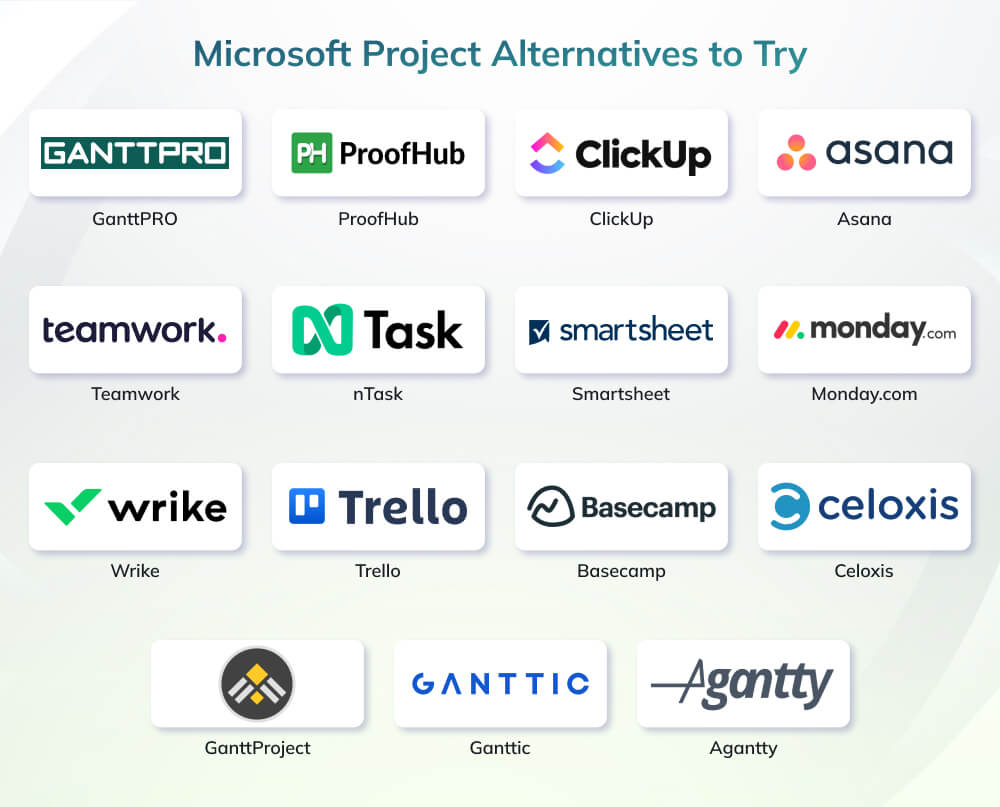
This guide presents the 15 best Microsoft Project alternatives that deliver strong scheduling capabilities, clearer workflows, and practical features for cross-functional teams. Each option has been assessed for usability, collaboration depth, reporting strength, and overall value to help you identify a solution aligned with your delivery environment, maturity level, and portfolio complexity.
How We Selected the Best Microsoft Project Alternatives
To ensure this list accurately reflects what modern delivery teams need, every tool was evaluated against criteria typically used by PMOs, enterprise IT teams, and project managers.
- Usability & Adoption Speed: learning curve, interface clarity, and how quickly teams can become productive.
- Planning & Scheduling Strength: support for timelines, dependencies, workloads, and resource allocation.
- Collaboration & Workflow Fit: real-time communication, visibility, and suitability for remote or hybrid teamwork.
- Reporting & Portfolio View: dashboards, analytics depth, and executive-level insights.
- Integrations & Ecosystem Compatibility: ability to connect with Microsoft 365, Google Workspace, Slack, Teams, CRMs, and dev tools.
- Pricing Transparency & Value: accessibility for different team sizes and overall cost-effectiveness compared to MS Project.
Quick Comparison Table (with accurate starting prices)
| Tool | Best For | Key Strengths | Starting Price* |
| GanttPRO | Teams wanting MS Project-style Gantt planning | Strong Gantt scheduling, multiple views, fast onboarding | From $7/user/month (Core plan, billed annually) |
| ProofHub | Growing teams needing flat, non–per-user pricing | All-in-one PM + collaboration, unlimited users | From $45/month (Essential, flat rate, billed annually) |
| ClickUp | All-in-one workspace (tasks, docs, goals) | Flexible views, automation, strong free tier | Free plan, paid from $7/user/month (Unlimited, billed annually) |
| Asana | Small and mid-sized teams | Clean UI, task workflows, solid integrations | Free plan, paid from $10.99/user/month (Starter, billed annually) |
| Teamwork | Client-service / agency work | Time tracking, billing, client collaboration | Free plan, paid from around $10.99/user/month |
| nTask | Budget-conscious teams needing essentials | Tasks, time tracking, risk/issue management | Free plan, paid from $3–4/user/month (Premium) |
| Smartsheet | Enterprise PMOs, spreadsheet-centric teams | Grid + Gantt, automation, resource management | From $9/member/month (Pro) |
| Monday.com | Visual, board-based work management | Custom boards, automations, many templates | Free plan, paid from $8/seat/month (Basic, billed annually) |
| Wrike | Cross-functional and larger teams | Advanced views, automation, dashboards | Free plan, paid from $10/user/month (Team, billed annually) |
| Trello | Lightweight Kanban, simple projects | Extremely easy boards, flexible structure | Free plan, paid from $5/user/month (Standard) |
| Basecamp | Communication–first teams & SMEs | Messages, tasks, files in one place, unlimited users | $299/month, flat rate (Pro Unlimited, billed annually) |
| Celoxis | Portfolio & resource-heavy environments | Enterprise PPM, deep reporting & analytics | From $25/user/month (Essential, billed annually, min 5 users) |
| GanttProject | Individuals needing classic Gantt offline | Free desktop app, WBS, dependencies | Free (donation-based, no mandatory fee) |
| Ganttic | Resource-centric planning | Capacity planning, resource utilization views | Free up to 10 resources, paid from $25/month (up to 20 resources) |
| Agantty | Small teams needing a simple free Gantt tool | Unlimited projects in free version, visual Gantt | Free core version; Premium from about €4.90/user/month |
Best Microsoft Project Alternatives to Try in 2026
Selecting the right MS Project replacement depends on how your team plans, collaborates, and reports. The tools below were chosen for their scheduling strength, usability, and ability to support modern, cross-functional delivery environments. Each summary focuses on practical value, not marketing claims, so you can assess fit quickly and confidently.
1. GanttPRO
 |
|
| GanttPRO is one of the closest like-for-like replacements for Microsoft Project, especially for teams that depend on structured timelines and resource visibility. It retains the rigor of traditional scheduling while improving ease of use, making it suitable for PMOs and delivery teams that need precision without complexity. | |
| Key Highlights |
|
| Pros |
|
| Cons |
|
| Pricing |
|
| GeoComply Streamlines Long-Term Infrastructure Planning with GanttPRO
GeoComply is a Vancouver-based company operating in media and payment transaction protection, providing location services and identity verification for regulated US markets. The Head of Infrastructure and DevOps project managers use GanttPRO to plan complex, long-term projects spanning two to three years. Before GanttPRO, the team relied on Excel and other Gantt tools that lacked flexibility, workload tracking, and clear dependency visibility. With GanttPRO, they gained a structured timeline view, accurate resource distribution using virtual resources, and better deadline and effort estimation. The team successfully delivered two major projects and quickly assessed the impact of staffing changes. GanttPRO now supports planning multiple short- and long-term initiatives with confidence. |
2. ProofHub
 |
|
| ProofHub is a structured work management platform designed for teams that want a single, central environment for tasks, discussions, notes, and scheduling without per-user pricing. Its fixed-cost model makes it attractive for growing teams, while its toolset enables straightforward planning and collaboration without the complexity of enterprise PM software. | |
| Key Highlights |
|
| Pros |
|
| Cons |
|
| Pricing | Ultimate Control — $89/month (billed annually) (Previously $150 — limited-time offer)
Essential — $45/month (billed annually)
|
3. ClickUp
 |
|
| ClickUp is a flexible, all-in-one work platform designed for teams that want to consolidate tasks, documents, goals, and workflows into a single system. It offers far more configurability than traditional project tools, making it suitable for teams that need adaptable structures rather than rigid scheduling environments. | |
| Key Highlights |
|
| Pros |
|
| Cons |
|
| Pricing |
|
4. Asana
 |
|
| Asana is a structured work management platform known for its clarity, simple navigation, and strong support for task-based workflows. It suits teams that prioritize visibility, repeatable processes, and cross-functional coordination without needing the heavy configuration of more complex tools. | |
| Key Highlights |
|
| Pros |
|
| Cons |
|
| Pricing |
|
5. Teamwork
 |
|
| Teamwork is designed with client-service and agency environments in mind, offering built-in features for time tracking, billing, and client collaboration. It provides stronger financial and workload oversight than many general-purpose PM tools, making it a solid choice for teams managing external deliverables and billable projects. | |
| Key Highlights |
|
| Pros |
|
| Cons |
|
| Pricing |
|
6. nTask
 |
|
| nTask is a lightweight, budget-friendly project management tool suited to small teams that need essential features without the overhead of complex platforms. It covers tasks, risks, time tracking, and basic collaboration, offering a practical entry point for teams with straightforward project structures. | |
| Key Highlights |
|
| Pros |
|
| Cons |
|
| Pricing |
|
7. Smartsheet
 |
|
| Smartsheet is a powerful, enterprise-grade work management platform that blends the familiarity of spreadsheets with advanced project, resource, and workflow automation capabilities. It is a strong contender for teams that require structured planning, portfolio visibility, and embedded governance across multiple projects and departments. | |
| Key Highlights |
|
| Pros |
|
| Cons |
|
| Pricing |
|
| Northern Ireland Council Improves Complaint Management with Smartsheet
Armagh City, Banbridge, and Craigavon Council is one of Northern Ireland’s 11 local authorities, delivering regulatory, community, and neighbourhood services to residents. Previously, customer complaints were managed manually across departments using separate spreadsheets, resulting in poor visibility, inconsistent reporting, and limited accountability. With new statutory requirements from the Northern Ireland Public Service Ombudsman, the council needed a more robust and transparent system. Working with Project Plan Services, a Smartsheet Platinum Partner, the council implemented Smartsheet to centralise complaint handling, automate deadlines, and standardise reporting. The solution improved efficiency, data accuracy, real-time visibility, and accountability, enabling faster responses, better service delivery, and a measurable improvement in public trust. |
8. Monday.com
 |
|
| Monday.com is a visually driven work management platform that helps teams organize tasks, workflows, and project data through customizable boards. Its flexible structure and automation capabilities make it suitable for teams that want a modern, intuitive system without sacrificing operational clarity. | |
| Key Highlights |
|
| Pros |
|
| Cons |
|
| Pricing |
|
9. Wrike
 |
|
| Wrike is a robust work management platform built for teams that need structure, visibility, and real-time coordination across complex, cross-functional projects. With advanced automation, custom dashboards, and enterprise-grade controls, Wrike suits organizations that require deeper governance than lightweight tools can support. | |
| Key Highlights |
|
| Pros |
|
| Cons |
|
| Pricing |
|
Real-World Case Study: House of Design (Manufacturing & Technology)House of Design (HoD), a US-based robotics and automation firm with over 90 employees, adopted Wrike to replace fragmented tools such as spreadsheets, email, and standalone systems. As the company scaled rapidly, Wrike became its single source of truth across engineering, manufacturing, procurement, HR, and assembly teams. Using Wrike’s Gantt charts, request forms, workload views, and automation, HoD gained visibility into capacity, part fabrication workflows, and project timelines. Over three years, the company saved more than 16,600 hours and achieved approximately $832,000 in cost savings, while significantly improving delivery predictability and cross-team coordination. |
10. Trello
 |
|
| Trello is a simple, Kanban-first project management tool ideal for teams that want visual clarity without operational overhead. It excels at organizing tasks into stages, making it a strong fit for lightweight workflows, personal productivity, and small project teams that value ease of use over complex features. | |
| Key Highlights |
|
| Pros |
|
| Cons |
|
| Pricing |
|
11. Basecamp
 |
|
| Basecamp is a communication-centric platform designed for teams that want a unified space for discussions, tasks, schedules, and file management. Its flat-rate pricing and simplicity make it appealing for small businesses and cross-functional teams that prioritize clarity over detailed project controls. | |
| Key Highlights |
|
| Pros |
|
| Cons |
|
| Pricing |
|
12. Celoxis
 |
|
| Celoxis is an enterprise-grade project and portfolio management (PPM) platform built for organizations that need deep scheduling, resource optimization, financial tracking, and cross-portfolio visibility. It closely mirrors the rigor of Microsoft Project while extending into full PPM capabilities, making it a strong choice for PMOs and mid-to-large enterprises. | |
| Key Highlights |
|
| Pros |
|
| Cons |
|
| Pricing |
|
13. GanttProject
 |
|
| GanttProject is a free, open-source desktop tool designed for users who need classic project scheduling without cloud features or collaborative complexity. It closely follows traditional Gantt chart principles, making it suitable for individuals, students, and small teams that require a no-cost alternative to Microsoft Project with basic but reliable functionality. | |
| Key Highlights |
|
| Pros |
|
| Cons |
|
| Pricing | Free Desktop App — $0
(Windows, macOS, Linux — full Gantt chart tool) GanttProject Cloud — Paid Used for collaboration, cloud storage, multi-user access.
|
14. Ganttic
 |
|
| Ganttic is a resource-first planning tool designed for teams that need clear visibility into workloads, capacity, and multi-project scheduling. Unlike task-centric platforms, Ganttic focuses on people and equipment allocation, making it well-suited for operations, agencies, engineering teams, and organizations that manage shared resources across parallel projects. | |
| Key Highlights |
|
| Pros |
|
| Cons |
|
| Pricing | Resource-based pricing (unlimited users in all plans)
|
15. Agantty
 |
|
| Agantty is a lightweight Gantt-based project management tool designed for small teams that need simple timeline planning without advanced features or cost complexity. It focuses on providing a clean, visual overview of tasks and projects, making it suitable for freelancers, non-profits, and small teams managing straightforward workflows. | |
| Key Highlights |
|
| Pros |
|
| Cons |
|
| Pricing |
|
Conclusion
Choosing the right Microsoft Project alternative ultimately comes down to how your team works, collaborates, and scales. Whether you need a lightweight tool for simple workflows or a full-scale platform for enterprise portfolio management, the options in this guide give you plenty of flexibility. As project management evolves in 2026, teams thrive when they combine the right tools with strong PM skills and modern methodologies.
If you want to strengthen your expertise and lead projects with confidence, explore Invensis Learning’s globally recognized Project Management Certification Courses. These programs help you elevate your capabilities and make smarter tool and workflow decisions for your organization.